
Creatine Monohydrate: Benefits, Dosage and Safety
Creatine is one of the most researched sports supplements. Taken as creatine monohydrate at 3–5 g a day, it reliably improves performance in short, high-intensity efforts and helps resistance-trained people gain strength and lean mass. It is well tolerated in healthy adults; the main side effect is a small, expected gain in body water.
Last reviewed 2026-10-17. Educational information, not medical advice.
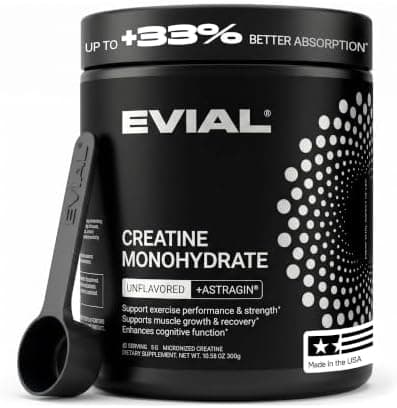
Creatine Monohydrate — Strength, Power & Recovery
Muscle — check price on Amazon.
Creatine Monohydrate — Strength, Power & Reco…
Check price on AmazonWhat is Creatine?
Creatine is a compound made in the body from the amino acids arginine, glycine and methionine, mostly in the liver and kidneys. About 95% of it is stored in skeletal muscle, where it is converted to phosphocreatine and used to regenerate ATP, the cell's immediate energy currency, during brief maximal efforts such as sprints and heavy lifts.
Diet supplies roughly 1–2 g a day for people who eat meat and fish; vegetarians and vegans get very little from food and tend to start with lower muscle stores. Supplementing raises muscle creatine and phosphocreatine stores by about 20–40%, which is the basis for its effects.
Creatine monohydrate is the form used in the large majority of studies. Other forms (creatine HCl, buffered creatine, ethyl ester, gummies) have not been shown to work better, and some deliver less creatine per gram.
Typical uses
Strength and power training
Combined with resistance training, creatine increases maximal strength, repetitions to failure and power output compared with training alone. The extra training volume it allows is thought to drive most of the long-term gains.
Lean mass
Users typically gain 1–2 kg in the first weeks, largely water drawn into muscle, followed by modestly greater gains in lean mass over months of training.
Repeated sprints and team sports
Creatine helps maintain output across repeated short bursts with brief recovery, as in football, basketball or interval training. It does not meaningfully help steady endurance performance.
Healthy ageing and other areas under study
In older adults who also do resistance training, creatine may add small benefits for muscle and strength. Research on cognition (especially during sleep deprivation), depression and bone health is ongoing and not yet conclusive.
How strong is the evidence?
- StrongHigh-intensity, short-duration exercise performance. Hundreds of controlled trials and position stands from sports-nutrition bodies support this.
- StrongStrength and lean mass with resistance training. Consistent meta-analytic findings in younger and older adults.
- ModerateMuscle function in older adults (with training). Benefits are smaller and depend on training.
- LimitedCognition, mood, brain health. Small or mixed studies; most promising under sleep deprivation or in people with low intake.
- InsufficientEndurance performance. No consistent benefit for long, steady efforts.
Typical doses
| Context | Dose | Notes |
|---|---|---|
| Daily maintenance (most people) | 3–5 g creatine monohydrate per day | Muscle stores saturate in about 3–4 weeks. |
| Optional loading phase | ~20 g/day split into 4 doses for 5–7 days, then 3–5 g/day | Saturates stores within a week; more likely to cause stomach upset and early water gain. |
| Dose by body weight | ≈0.03 g per kg per day | About 2 g at 70 kg and 3 g at 100 kg; 5 g/day is a common, well-tolerated maintenance dose. |
- Timing matters little; take it at a consistent time each day. Taking it with a meal can improve tolerance.
- Mix powder fully in water, juice or a shake. Creatine is stable in powder form; it slowly degrades if left dissolved in liquid for days.
- Cycling on and off is not required. Stores fall back to baseline over 4–6 weeks after stopping.
Safety, side effects and interactions
Safety
- In healthy adults, creatine monohydrate at recommended doses has a strong safety record in studies lasting up to several years.
- Expected effect: a 1–2 kg increase in body weight from water stored in muscle.
- Large single doses (10 g or more) can cause stomach discomfort, bloating or diarrhoea; splitting the dose helps.
- Creatine raises blood creatinine, a lab marker used to estimate kidney function, without indicating kidney damage. Tell your doctor you take it before kidney tests.
- Claims that creatine causes dehydration, cramping or hair loss are not supported by consistent evidence.
Interactions
- Medicines that can affect the kidneys (for example high-dose NSAIDs, some diuretics, lithium, aminoglycosides, cyclosporine): ask a clinician before combining.
- Caffeine: earlier small studies suggested caffeine might blunt creatine's effect; later research is mixed, and moderate coffee intake is generally fine.
Who should avoid it or ask a doctor first
- People with kidney disease or reduced kidney function, unless their doctor approves.
- Pregnancy and breastfeeding: not enough safety data for supplemental doses.
- Children and adolescents outside of medical or supervised sports settings.
Frequently asked questions
Is creatine safe for the kidneys?
In people with healthy kidneys, studies have not shown harm at 3–5 g a day. Creatine does raise creatinine on blood tests, which can be misread as reduced kidney function, so mention it to your doctor. People with existing kidney disease should not use it without medical advice.
Do I need a loading phase?
No. Loading (about 20 g a day for a week) fills muscle stores faster, but 3–5 g a day reaches the same level in about a month with fewer stomach issues.
Will creatine make me look bloated?
The early weight gain is water held inside muscle cells, not under the skin. Most people notice a small scale change rather than visible bloating.
Is creatine HCl or a gummy better than monohydrate?
Monohydrate is the most studied and least expensive form. Other forms have not been shown to work better. With gummies, check the label for the actual grams of creatine per serving.
Does creatine work for women?
Yes. Women respond to creatine with improvements in strength and high-intensity performance, and the same 3–5 g daily dose is used.
Should vegetarians take more?
Vegetarians and vegans start with lower muscle creatine and often respond more, but the standard dose is still 3–5 g a day.
Choosing a Creatine supplement
- Choose plain creatine monohydrate (often labelled "micronized" for easier mixing).
- Look for third-party testing (for example NSF Certified for Sport or Informed Sport) if you compete in tested sports.
- Check the grams of creatine per serving, especially in gummies and blends.