
Turmeric (Curcumin): Benefits, Dosage and Safety
Turmeric is a spice whose main active compounds, curcuminoids, are concentrated in supplements. The best human evidence is a modest reduction in knee osteoarthritis pain; most other claims rest on small or early studies. Curcumin is poorly absorbed on its own, so products add black pepper extract or use special formulations. It is usually well tolerated, but rare liver injury and drug interactions are real cautions.
Last reviewed 2026-10-17. Educational information, not medical advice.
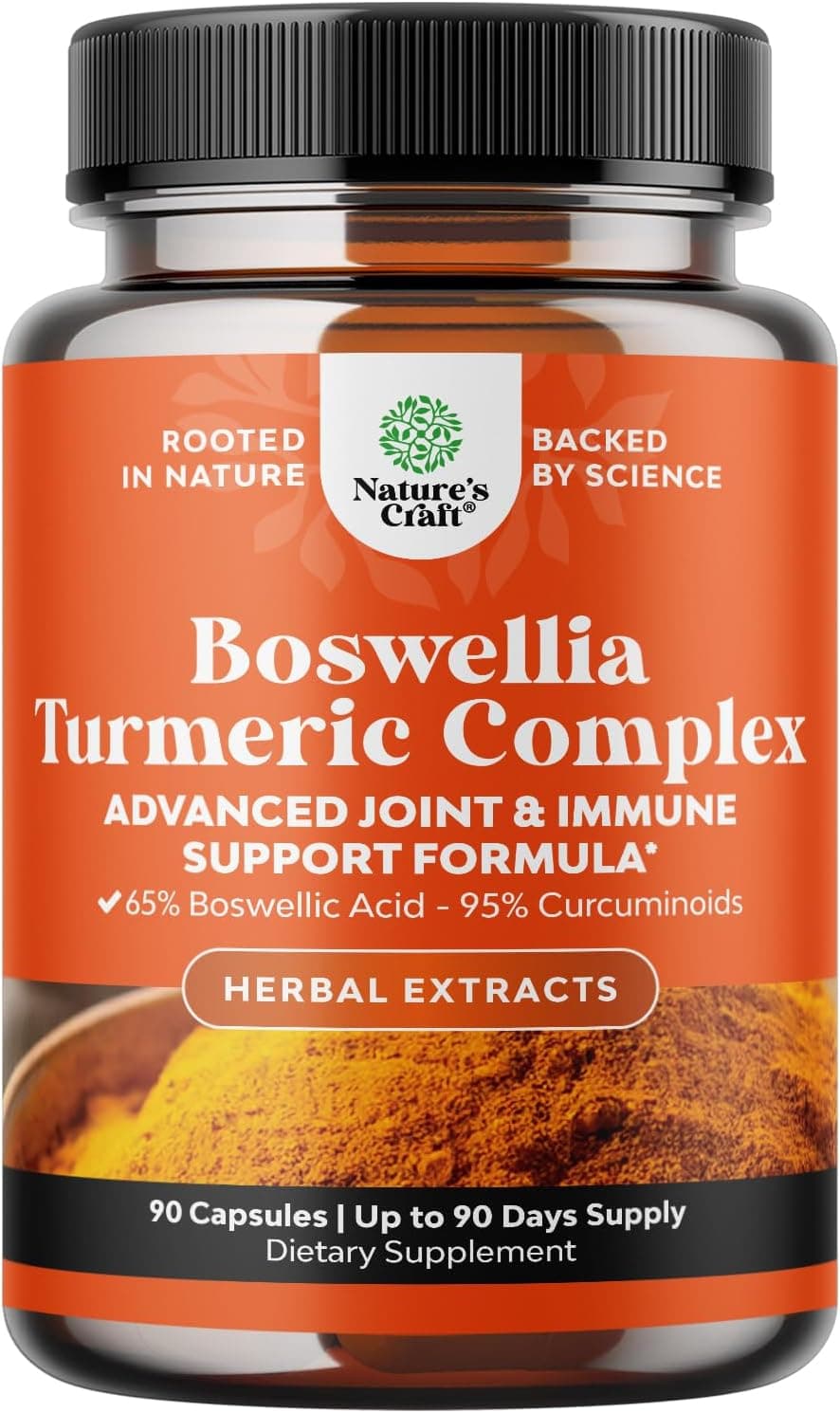
Natures Craft Boswellia + Turmeric 90ct
Boswellia and turmeric for joint comfort — check price on Amazon.
Natures Craft Boswellia + Turmeric 90ct
Check price on AmazonWhat is Turmeric?
Turmeric is the dried root (rhizome) of Curcuma longa, a plant in the ginger family. It gives curry its yellow colour and has a long history in Ayurvedic and traditional Chinese medicine.
Turmeric powder contains only about 2–5% curcuminoids (curcumin, demethoxycurcumin and bisdemethoxycurcumin). Supplements are usually extracts standardized to 95% curcuminoids, so one capsule can provide what would take many teaspoons of the spice.
Curcumin is absorbed poorly and broken down quickly. Piperine (black pepper extract, sold as BioPerine) can raise blood levels many times over in short studies; other approaches include phospholipid, micellar and nanoparticle formulations.
Typical uses
Joint pain and osteoarthritis
Several randomized trials, pooled in meta-analyses, found that curcumin extracts reduce knee osteoarthritis pain and stiffness compared with placebo, with effects in some studies similar to NSAIDs. Trials are mostly small and short (4–12 weeks).
Exercise recovery
Some studies report less muscle soreness after hard exercise; results are inconsistent and effects small.
Metabolic and heart health markers
Small trials have looked at blood lipids, blood sugar and markers of inflammation. Changes, where seen, are modest and not consistent enough to rely on.
Digestive comfort
Turmeric is used traditionally for indigestion. Evidence for dyspepsia and irritable bowel symptoms is limited.
How strong is the evidence?
- ModerateKnee osteoarthritis pain. Consistent but small, short trials; quality varies.
- LimitedPost-exercise muscle soreness. Small studies with mixed results.
- LimitedCholesterol, blood sugar, inflammation markers. Modest, inconsistent effects in small trials.
- InsufficientCancer, Alzheimer's disease, depression. Mostly lab or early-stage research; not a treatment.
Typical doses
| Context | Dose | Notes |
|---|---|---|
| Standardized curcumin extract (95% curcuminoids) | 500–1,000 mg per day, often split into two doses | Doses used in most osteoarthritis trials; some used up to 1,500–2,000 mg. |
| Enhanced-absorption formulations | Follow the label (often 100–500 mg) | These deliver more curcumin per milligram, so doses are not interchangeable. |
| Turmeric as a spice | Culinary amounts | Safe as food; provides far less curcumin than supplements. |
- Take with a meal containing some fat to improve absorption and reduce stomach upset.
- Allow 4–8 weeks to judge an effect on joint pain.
- Piperine also changes how the body handles several medicines; see interactions.
Safety, side effects and interactions
Safety
- Generally well tolerated at studied doses for up to a few months. Common side effects are mild: stomach upset, nausea, diarrhoea, reflux.
- Rare cases of liver injury have been reported with turmeric and curcumin supplements, more often with high-bioavailability or piperine-containing products. Stop and seek care if you notice dark urine, yellowing of the skin or eyes, or upper-right abdominal pain.
- Turmeric may stimulate gallbladder contraction, which can be a problem for people with gallstones or bile duct obstruction.
- High intakes may reduce iron absorption.
Interactions
- Blood thinners and antiplatelet drugs (warfarin, clopidogrel, aspirin, DOACs): curcumin may increase bleeding risk.
- Diabetes medicines: possible additive blood-sugar lowering.
- Piperine-containing products can raise levels of drugs metabolized by liver enzymes (for example some antidepressants, anticonvulsants, calcium channel blockers); check with a pharmacist.
- Some cancer treatments: discuss with your oncology team before using curcumin supplements.
Who should avoid it or ask a doctor first
- People with gallstones, bile duct obstruction or liver disease.
- Anyone stopping blood thinners or preparing for surgery (stop about 2 weeks before, unless told otherwise).
- Pregnancy and breastfeeding: culinary amounts are fine; avoid supplemental doses.
Frequently asked questions
Is turmeric the same as curcumin?
No. Turmeric is the whole spice; curcumin is its main active compound. Most research on health effects uses concentrated curcumin extracts, not culinary turmeric.
Why do turmeric supplements contain black pepper?
Piperine from black pepper slows the breakdown of curcumin and can raise its blood levels substantially. The trade-off is that piperine can also raise levels of some medicines.
How long does turmeric take to work for joints?
Studies typically measured effects after 4–12 weeks of daily use. If you notice no change after 2 months, it is unlikely to help you.
Can turmeric replace my anti-inflammatory medicine?
Do not stop prescribed medicine without advice. Curcumin had modest effects in osteoarthritis trials and is not a substitute for treatment of inflammatory diseases.
Is turmeric bad for the liver?
Liver injury is rare but has been reported, mostly with concentrated or enhanced-absorption supplements. People with liver disease should avoid them, and anyone with symptoms of liver trouble should stop and see a doctor.
Choosing a Turmeric supplement
- Look for an extract standardized to 95% curcuminoids and the amount of curcuminoids per serving.
- Note whether the product adds piperine or uses an enhanced-absorption form, and adjust expectations for interactions.
- Choose brands with third-party testing for heavy metals, which have been found in some turmeric products.
- Combination joint formulas (for example turmeric with boswellia) are common; check the dose of each ingredient.